
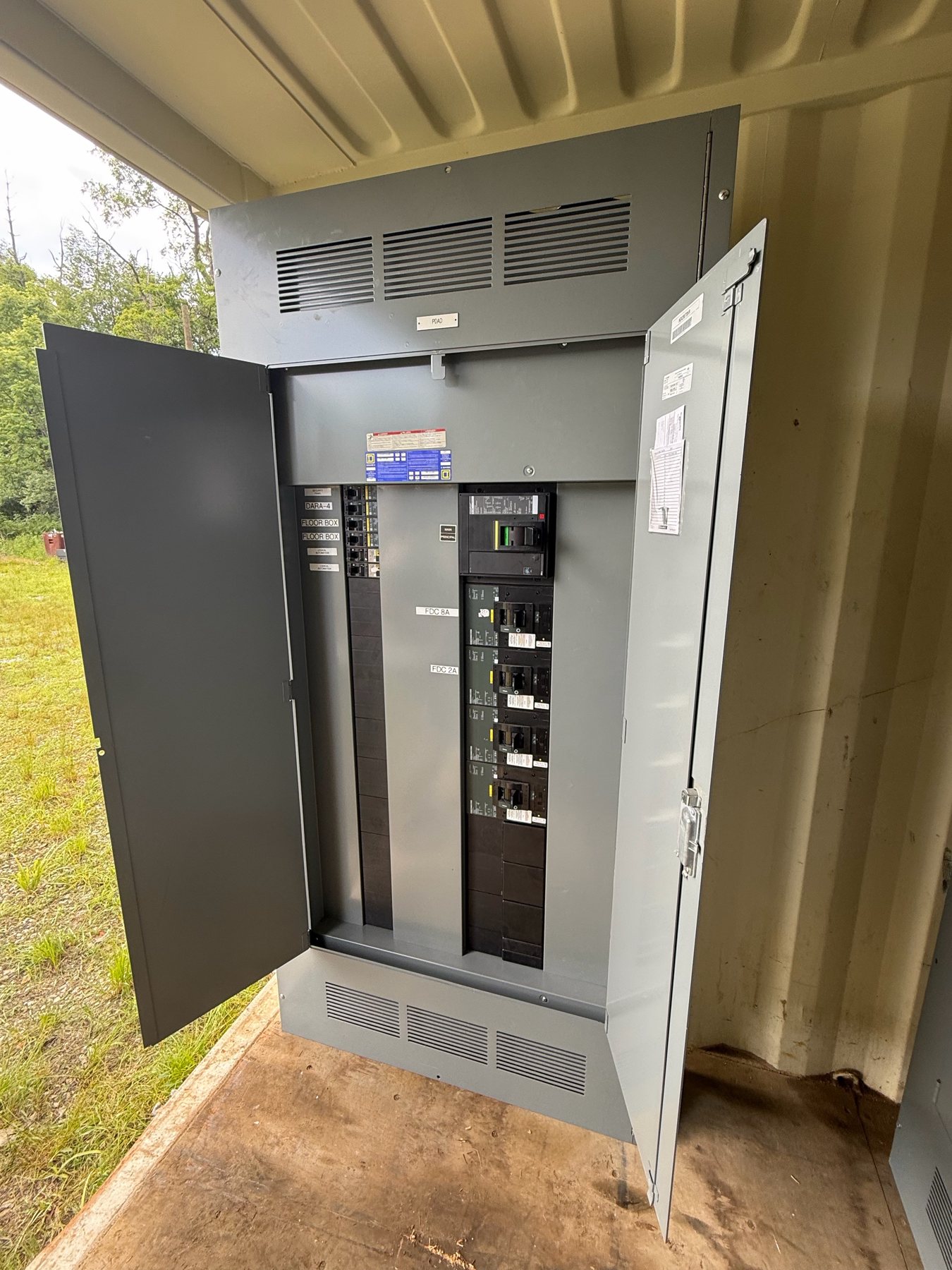
Selling automatic transfer switches: what to share
If your business owns automatic transfer switches in Maryland that is no longer needed, you can contact us about selling it. We are an equipment buyer: we review used and surplus assets and may make a cash offer. The scope can range from a single item to a larger group, depending on what you are authorized to sell. The offer depends on the information and equipment involved, not an assumed value for every unit. We consider all voltage classes and do not require seller testing. If the label or an existing record indicates 480 V, share the marking as written and note which item it describes. A voltage designation alone does not establish condition, compatibility or value.
An automatic transfer switch may be identified by its assembly manufacturer, model and nameplate ratings, but those markings are not a substitute for an operating test. If the information is available without opening the enclosure, share the voltage and current details as written and explain whether the transfer-switch cabinet and any associated controls are included. Tell us about visible exterior damage or gaps in the records instead of assuming the equipment is complete. The seller does not need to initiate a transfer, operate the switch or expose internal components for us to consider a request.
A sale may include a complete assembly, separate sections, loose devices, or some combination of those items. State what is included and mention anything you intend to keep, particularly accessories or components stored away from the main equipment. Do not assume that an accessory belongs to a particular cabinet just because it was found nearby; an existing label or record may clarify the connection. If you are uncertain, describe the uncertainty. Separating the scope of the offer from assumptions about the equipment helps us review the actual lot.
Records, condition and the scope of the sale
If the equipment has been stored for a long time, the details may be scattered across inventory records, packing lists and photographs taken on different dates. Sharing those existing materials together can give us a clearer picture than a single asset number. Explain which pictures show the current equipment and which are historical references, and note whether any accessories are held separately. We can discuss questions about completeness during the review. You do not need to unpack, move or energize stored equipment for the purpose of the initial inquiry.
When a nameplate cannot be read safely, a seller can still describe the equipment type, quantity, manufacturer if known, and the general project context. State plainly that the rating or model has not been confirmed. If an old photograph or inventory record is available, distinguish it from a current observation. Do not open a door or cover to get a better view and do not operate the equipment. We can discuss the available information without requiring a seller to test or handle an electrical asset.
Buyer-handled rigging and logistics
If the equipment is already in storage, explain whether it is in one place or divided among several areas, and whether it is a complete lineup or separate pieces. An existing packing list or safely available photo can be helpful; you do not need to uncrate or rearrange anything to create a request. Mention any gate hours or access rules that might affect the pickup discussion. We handle the logistics and freight, with the actual plan coordinated around the details of the equipment and the site.
For a phased project, identify the items available now and those whose release is still uncertain. If there are multiple buildings or anticipated phases, a short list of locations and equipment counts helps us understand the scope without assuming that every item will be available at the same time. The schedule and final logistics are coordinated around the actual project. Our team handles crane work when needed, rigging, qualified disconnects, loading, freight and hauling; the seller does not have to perform that work.
Cash offer and upfront payment
You can contact us with one item or a larger group of surplus assets. Send a list and safely available external nameplate photos if you have them, and let us know about the location and any known site access constraints. We consider all voltage classes, and an offer depends on review rather than a presumed value. If a cash offer is made and accepted, we pay upfront. We arrange qualified disconnects and handle the necessary crane, rigging, loading, hauling and freight. Sellers do not perform testing or removal work.
If pictures are subject to security or privacy rules, let us know at the start. A site contact can explain which exterior views or existing records may be shared, and a written description can still begin the discussion. Avoid showing confidential information that is not needed for the inquiry. Do not enter restricted spaces, open equipment or bypass site procedures for a photograph. Our team can coordinate access and the required qualified work as part of the removal plan rather than asking the seller to do it.