
Selling switchgear: what to share
If your business owns switchgear in Maryland that is no longer needed, you can contact us about selling it. We are an equipment buyer: we review used and surplus assets and may make a cash offer. The scope can range from a single item to a larger group, depending on what you are authorized to sell. The offer depends on the information and equipment involved, not an assumed value for every unit. We consider all voltage classes and do not require seller testing. If an existing label or record identifies the equipment as 4000 amp, share that marking as written. Current rating is not the same as voltage, interrupting rating or confirmed operating condition.
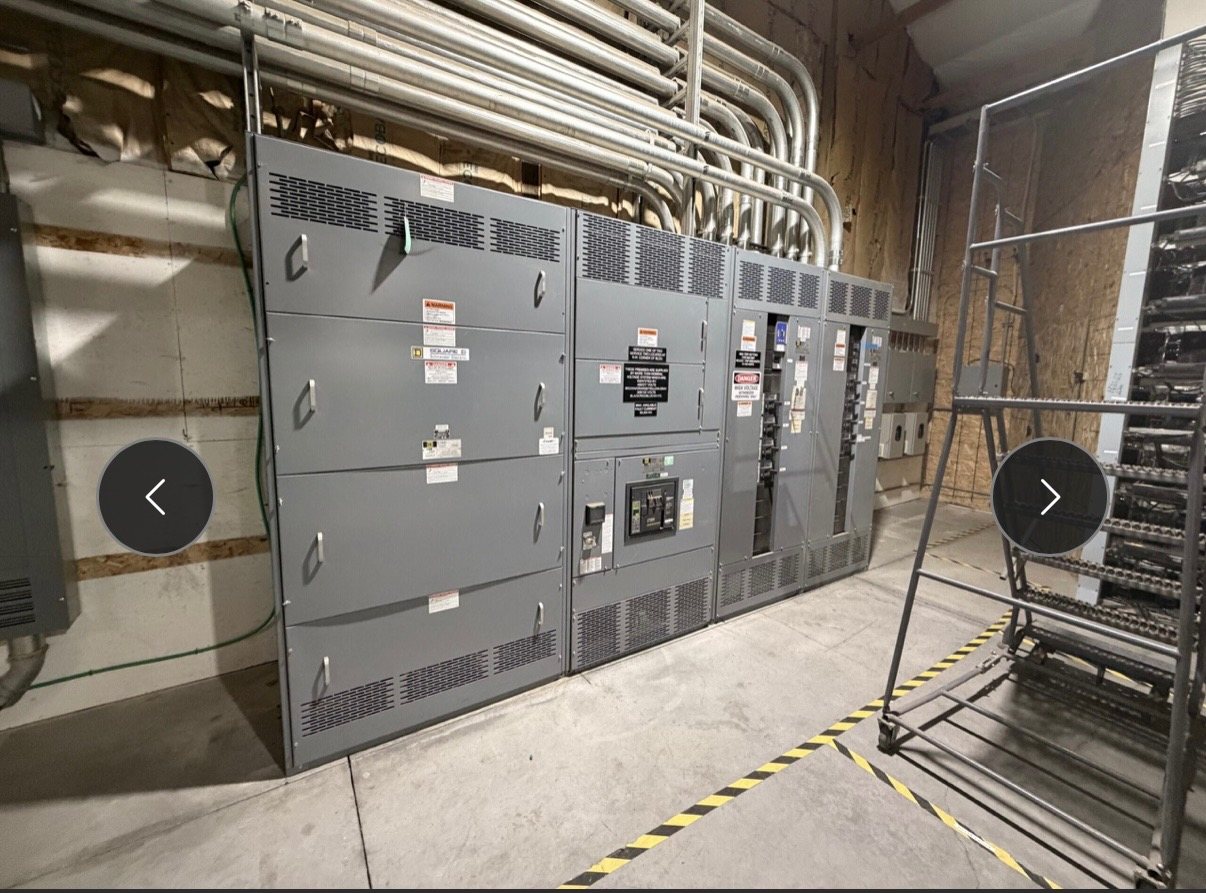
A switchgear lineup may have more than one section, and the name on the outside of the assembly may not tell the whole story about the devices installed in it. If safely visible or already in your records, tell us the manufacturer, model, voltage and continuous-current markings, the number of sections, and whether associated breakers are included. A photograph of the complete exterior helps relate those details to the actual assembly. If a marking is missing, obscured or inconsistent with an old document, say so rather than guessing. Those observations help identify the asset; they do not establish its condition, operating history or compatibility.
Individual assets often have several different identifiers. The manufacturer's model, serial number and rating may appear on a nameplate, while a building or plant may also have its own asset tag. When safely available, share each identifier as written and say which item it belongs to. A facility number is useful for matching your inventory but should not be treated as a substitute for a manufacturer's model. If a tag has been lost or a photo cannot be obtained safely, that does not prevent you from starting the conversation.
Records, condition and the scope of the sale
An assembly may have been modified or expanded during its service life. If a readily available document records a replacement component or an added section, mention it alongside the visible manufacturer and model information. Keep the original assembly rating distinct from markings on a particular device, and do not assume that two pieces with similar appearances are interchangeable. Where the available paperwork cannot establish a detail, describe the gap instead of trying to resolve it through physical inspection. The goal is an accurate description of what is being offered, not a technical certification.
If pictures are subject to security or privacy rules, let us know at the start. A site contact can explain which exterior views or existing records may be shared, and a written description can still begin the discussion. Avoid showing confidential information that is not needed for the inquiry. Do not enter restricted spaces, open equipment or bypass site procedures for a photograph. Our team can coordinate access and the required qualified work as part of the removal plan rather than asking the seller to do it.
Buyer-handled rigging and logistics
Pickup planning starts with the site's practical constraints. Tell us where the equipment is located, whether there is a loading area, and whether gates, vehicle access, security procedures or available working hours affect the site. An approximate dimension or weight from an existing record can help if you have it; clearly mark an estimate as an estimate. You do not have to measure, lift or move equipment. We use the information to discuss the appropriate logistics after the equipment and sale terms have been reviewed.
If the equipment is already in storage, explain whether it is in one place or divided among several areas, and whether it is a complete lineup or separate pieces. An existing packing list or safely available photo can be helpful; you do not need to uncrate or rearrange anything to create a request. Mention any gate hours or access rules that might affect the pickup discussion. We handle the logistics and freight, with the actual plan coordinated around the details of the equipment and the site.
Cash offer and upfront payment
A clear exchange of information comes before an offer. Start with any safely available exterior photos and identification details, then identify the equipment quantity, condition, location and what is included in the proposed sale. Tell us what is unknown. We consider all voltage classes and assess the actual details rather than assigning a fixed value based on a category or rating. Following an accepted cash offer, we pay upfront. We handle qualified disconnects, rigging, loading, hauling and all freight; no testing or physical labor is required from the seller.
Freight and physical removal are different from the seller's responsibility to describe what is being offered. You can provide existing information about location and access without arranging labor, selecting a crane or preparing the equipment for loading. Our team handles the necessary rigging and logistics, and qualified personnel handle disconnects. All freight is paid by us. Tell us about relevant site rules or uncertainties so the work can be coordinated appropriately; do not expose yourself to electrical hazards to gather additional details.