
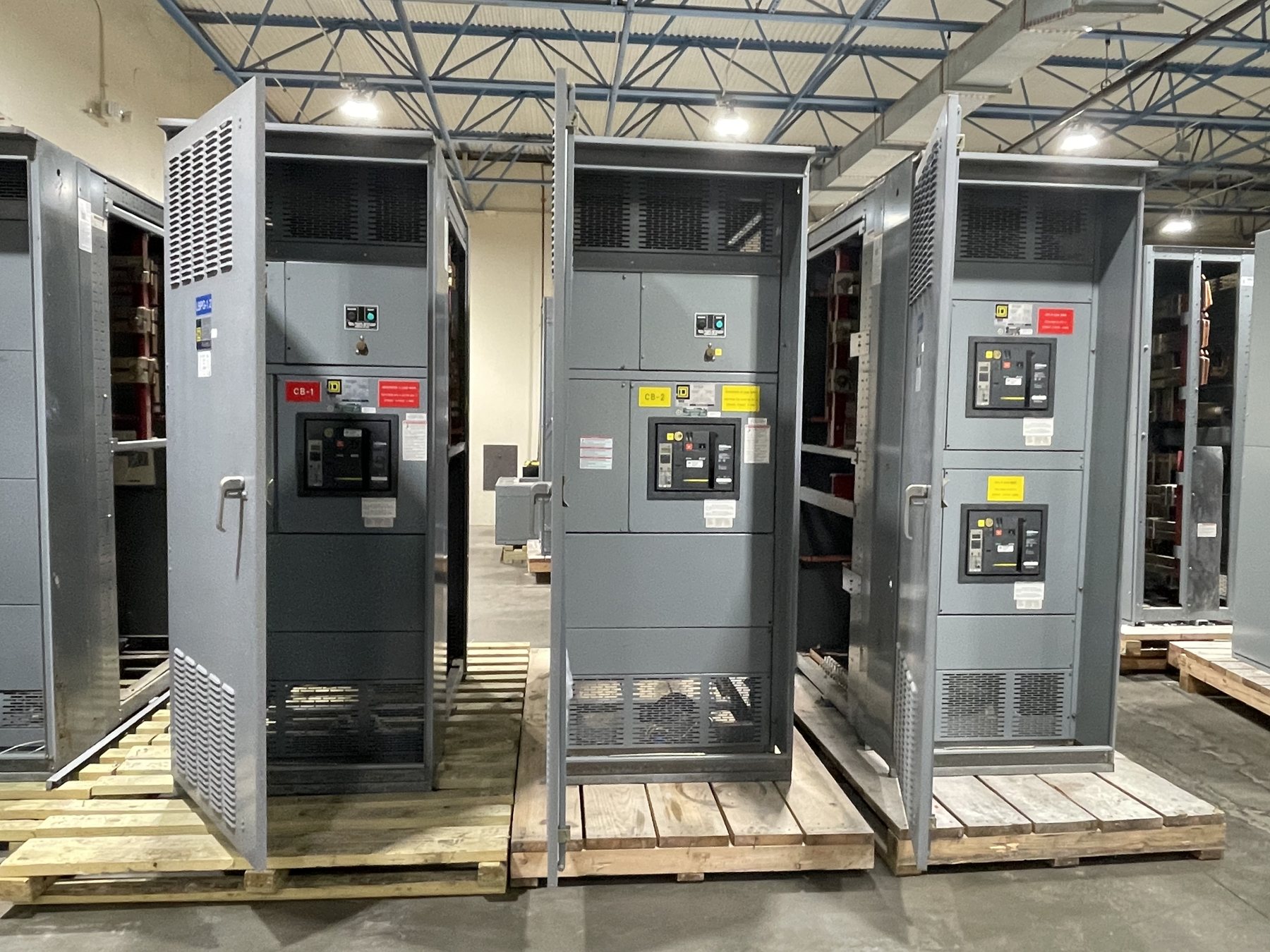
Sell Switchgear From a Decommissioned Data Center
Data center electrical infrastructure is built around reliable power distribution, but equipment can become surplus when a facility closes, capacity changes, or a power system is replaced. Maryland Electrical Switchgear Buyer buys used, surplus, and decommissioned switchgear from data centers. We are a buyer only: we purchase equipment rather than selling it. Our team considers equipment across all voltage classes and can review a single piece or a broader group associated with a site decommissioning.
A closed data center may still contain electrical rooms, distribution lineups, and equipment serving former server areas. Determining what to do with that infrastructure can be difficult when the original project team has moved on or records are incomplete. We offer a practical alternative to leaving unwanted switchgear in place while trying to locate separate electrical, rigging, and transportation resources. If we agree on a purchase, you receive an upfront payment before removal, and our team handles the physical work.
We handle crane work, rigging, qualified disconnects, loading, freight, and hauling on us. The seller does not need to test the equipment, open an enclosure, disconnect it, or get it onto a truck. You can provide whatever information is safely available and leave the removal planning and execution to our team. Even when equipment is still installed, starting a conversation does not require you to touch it.
Understand What May Be Available
Data center power systems may include switchgear at utility or distribution interfaces, switchboards feeding downstream loads, and breakers arranged in complex lineups. Automatic transfer switches can be part of the power-transfer arrangement, while busway may distribute power through equipment areas. Motor control centers, panelboards, and unit substations can also be present depending on the facility's design. We consider these related types of equipment as part of used or surplus electrical distribution opportunities.
Equipment does not have to come from an entire closed campus to be worth discussing. A project may leave a group of surplus breakers after an upgrade, an unused switchboard after a consolidation, or decommissioned switchgear in a facility that no longer needs the original capacity. Describe the pieces you know about and whether they are still in place or have already been disconnected. If you are unsure which equipment belongs together, share the existing documentation and let our team review it.
Make, model, voltage class, electrical rating, quantity, and visible condition help us understand a potential purchase. Manufacturer nameplates and external identification can be useful, but only when they can be viewed safely without opening or operating anything. An incomplete inventory is not a reason to take risks. Existing drawings, equipment lists, or photographs can provide helpful context, and unknown details can be identified as unknown.
A Simple Offer Process for Site Representatives
Begin with the equipment location and a description of what is available. When you have them, include safe exterior or visible-nameplate photos and any known make, model, rating, and condition details. If your project includes several rooms or lineups, an existing equipment schedule can help show the scope. Our team can review the information and discuss what equipment may be included in a cash offer.
We do not require seller testing. There is no need to energize equipment, exercise a breaker, remove a cover, or conduct an electrical assessment for us. If you cannot safely reach a label or do not have a picture, tell us what information is missing. A site representative can also flag any access restrictions or known site conditions without performing the removal work. Our team arranges qualified disconnects and the people and equipment required for the job.
When a purchase is agreed, we pay upfront before removal. The agreed transaction should make clear which equipment is being purchased and how the parties will coordinate access. Your role is not to hire a rigging crew or source freight; you can focus on the decision and payment while we handle those logistics. We do not promise a particular offer amount or removal date, because the equipment and site details need to be reviewed.
Removal Without Making Your Team the Moving Crew
Data center infrastructure may be located in electrical rooms, basement spaces, or areas with limited loading access. A lineup's route out of a building matters just as much as its location on an equipment list. Our team plans and handles the necessary logistics, including crane services where needed, rigging, qualified disconnects, loading, freight, and hauling. Those costs and arrangements are on us, rather than a separate removal project for the seller.
Existing information about building access, loading areas, site rules, and known obstacles helps us coordinate the work. You can share those details without dismantling racks, moving heavy equipment, or creating a path through electrical infrastructure yourself. If a safe removal requires specialized handling, our team will arrange the appropriate resources. The aim is to handle the complete equipment removal rather than leave you to find a transporter after accepting an offer.
For owners, operators, contractors, and representatives managing a decommissioned data center, the process is deliberately focused: tell us what you have using safe, available information; consider an offer; and, if a purchase is agreed, receive payment upfront. We take responsibility for the disconnect and removal logistics so that selling surplus switchgear does not add another technical job to your team's workload.