
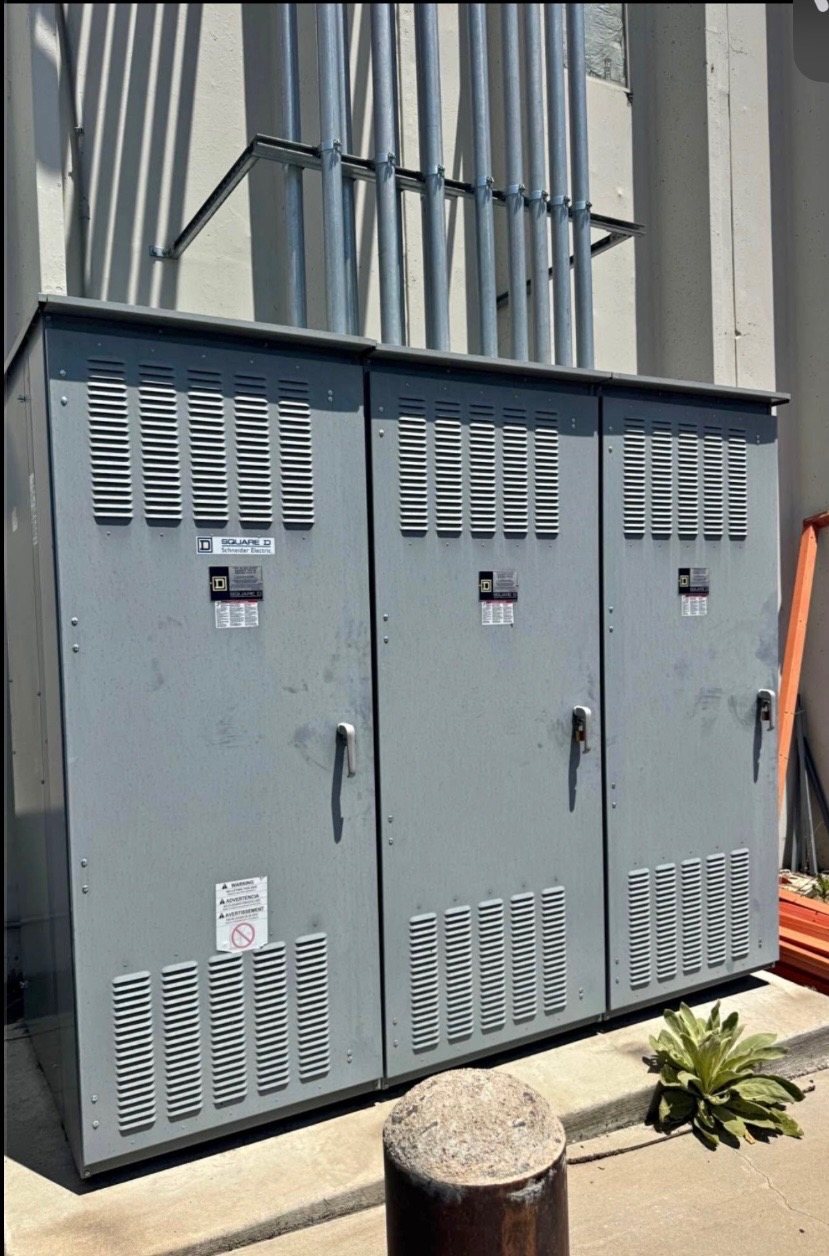
Selling motor control centers: what to share
If your business owns motor control centers in Maryland that is no longer needed, you can contact us about selling it. We are an equipment buyer: we review used and surplus assets and may make a cash offer. The scope can range from a single item to a larger group, depending on what you are authorized to sell. The offer depends on the information and equipment involved, not an assumed value for every unit. We consider all voltage classes and do not require seller testing.
A motor control center can comprise several vertical sections and removable units serving different loads. If your records or safe exterior views show the section count, manufacturer, model, voltage or current markings, include those details. Note any separately stored units and whether they form part of the proposed sale. A list that connects a photograph to each cabinet helps prevent similar-looking sections from being confused. There is no need to remove a unit, open a door or operate a control to make an inquiry; we can begin with the information already at hand.
At an industrial plant, equipment inventories may span production areas, utility spaces and storage locations. Explain which assets are surplus, whether they are grouped together, and what access or operating restrictions apply. Existing records can help identify equipment without interrupting operations. We handle the physical work and logistics, arranging qualified personnel for disconnects; sellers do not need to test, move or load the equipment. The offer and removal plan depend on the specific equipment and agreed project scope rather than a presumed plant configuration.
Records, condition and the scope of the sale
A project's boundaries can change over time. Before requesting an offer, it is useful to identify which equipment is genuinely available and who has authority to approve the sale. An asset may belong to a property owner, a tenant, a contractor or another party; the correct answer depends on the specific project. Tell us if a decision is still pending or if part of an assembly must remain on site. An inquiry can begin with incomplete information, but a clear description of the proposed sale helps avoid mixing retained assets with surplus assets.
When a nameplate cannot be read safely, a seller can still describe the equipment type, quantity, manufacturer if known, and the general project context. State plainly that the rating or model has not been confirmed. If an old photograph or inventory record is available, distinguish it from a current observation. Do not open a door or cover to get a better view and do not operate the equipment. We can discuss the available information without requiring a seller to test or handle an electrical asset.
Buyer-handled rigging and logistics
For a phased project, identify the items available now and those whose release is still uncertain. If there are multiple buildings or anticipated phases, a short list of locations and equipment counts helps us understand the scope without assuming that every item will be available at the same time. The schedule and final logistics are coordinated around the actual project. Our team handles crane work when needed, rigging, qualified disconnects, loading, freight and hauling; the seller does not have to perform that work.
A seller may have a preferred project sequence without knowing the details of a future lift or vehicle. Describe any relevant access restrictions, other work taking place nearby and any approval steps that could affect scheduling. If the equipment spans more than one room, identify the locations and the quantities involved. Our team handles the rigging and logistics, so the seller is not expected to arrange a crane, load the material or perform a disconnect. Actual timing and the collection plan are coordinated for the specific project.
Cash offer and upfront payment
A clear exchange of information comes before an offer. Start with any safely available exterior photos and identification details, then identify the equipment quantity, condition, location and what is included in the proposed sale. Tell us what is unknown. We consider all voltage classes and assess the actual details rather than assigning a fixed value based on a category or rating. Following an accepted cash offer, we pay upfront. We handle qualified disconnects, rigging, loading, hauling and all freight; no testing or physical labor is required from the seller.
If pictures are subject to security or privacy rules, let us know at the start. A site contact can explain which exterior views or existing records may be shared, and a written description can still begin the discussion. Avoid showing confidential information that is not needed for the inquiry. Do not enter restricted spaces, open equipment or bypass site procedures for a photograph. Our team can coordinate access and the required qualified work as part of the removal plan rather than asking the seller to do it.