
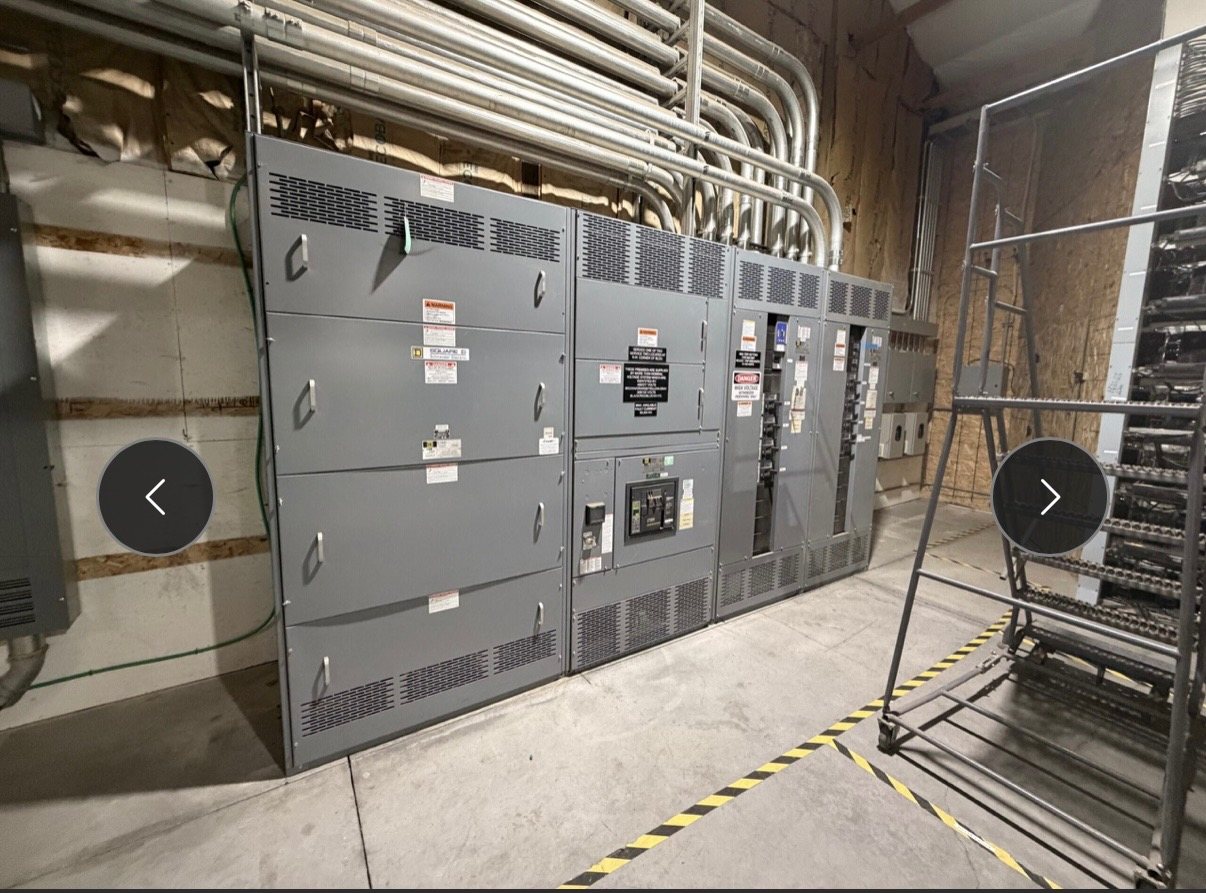
Selling switchgear: what to share
If your business owns switchgear in Aberdeen, Harford County that is no longer needed, you can contact us about selling it. We are an equipment buyer: we review used and surplus assets and may make a cash offer. The scope can range from a single item to a larger group, depending on what you are authorized to sell. The offer depends on the information and equipment involved, not an assumed value for every unit. We consider all voltage classes and do not require seller testing.
A switchgear lineup may have more than one section, and the name on the outside of the assembly may not tell the whole story about the devices installed in it. If safely visible or already in your records, tell us the manufacturer, model, voltage and continuous-current markings, the number of sections, and whether associated breakers are included. A photograph of the complete exterior helps relate those details to the actual assembly. If a marking is missing, obscured or inconsistent with an old document, say so rather than guessing. Those observations help identify the asset; they do not establish its condition, operating history or compatibility.
A nameplate can contain several electrical figures with different meanings. For example, a current marking, a voltage marking and a short-circuit marking should not be treated as interchangeable facts. Share the wording or a safely obtained exterior image rather than interpreting a number that is unclear. If a drawing and a nameplate differ, note the discrepancy. Our review considers the information available for the actual equipment, and a photograph alone cannot establish its electrical performance or suitability for another installation.
Records, condition and the scope of the sale
Equipment records are not always as complete as the physical inventory. A nameplate might be faded, an asset tag might use an internal numbering system, or an old schedule might describe a different configuration. Send the records you already have and distinguish verified label information from a note in a historical file. If two sources disagree, point out the difference rather than choosing one by assumption. We can review a partial account and identify what further information would be helpful, without asking the seller to open an enclosure or perform an electrical test.
If pictures are subject to security or privacy rules, let us know at the start. A site contact can explain which exterior views or existing records may be shared, and a written description can still begin the discussion. Avoid showing confidential information that is not needed for the inquiry. Do not enter restricted spaces, open equipment or bypass site procedures for a photograph. Our team can coordinate access and the required qualified work as part of the removal plan rather than asking the seller to do it.
Buyer-handled rigging and logistics
A facility may be operating normally even when some equipment is surplus. Tell us about access procedures, designated contacts and any restrictions on photography or visitor entry. Do not change operating conditions or work on an electrical system to prepare the sale. Our team arranges qualified personnel for the necessary disconnects and handles the rest of the rigging and logistics. The site's rules and the project's actual scope guide coordination; a seller does not need to provide labor, arrange hauling or pay the freight.
Before a collection plan is finalized, existing information about dimensions, weight, the path from the equipment and site access can help our team assess the logistics. If no reliable measurements exist, simply say they are unknown; an unsafe measurement is not necessary. Let us know about restricted hours, security clearance requirements and a person who can discuss the site. We handle the crane, rigging, qualified disconnects, loading and hauling as needed, and we pay all freight. Specific arrangements depend on the equipment and project.
Cash offer and upfront payment
Our role is to buy surplus equipment, not to sell equipment to the person making the inquiry. Share a description of the items you own or are authorized to sell, their general location and any relevant documentation. We review the information and may make a cash offer. If an offer is accepted, payment is upfront and we handle the physical side of the transaction: qualified disconnects, necessary crane and rigging work, loading, hauling and all freight. No seller testing, electrical work or physical handling is required.
Freight and physical removal are different from the seller's responsibility to describe what is being offered. You can provide existing information about location and access without arranging labor, selecting a crane or preparing the equipment for loading. Our team handles the necessary rigging and logistics, and qualified personnel handle disconnects. All freight is paid by us. Tell us about relevant site rules or uncertainties so the work can be coordinated appropriately; do not expose yourself to electrical hazards to gather additional details.