
Selling motor control centers: what to share
If your business owns motor control centers in Bowie, Prince George's County that is no longer needed, you can contact us about selling it. We are an equipment buyer: we review used and surplus assets and may make a cash offer. The scope can range from a single item to a larger group, depending on what you are authorized to sell. The offer depends on the information and equipment involved, not an assumed value for every unit. We consider all voltage classes and do not require seller testing.
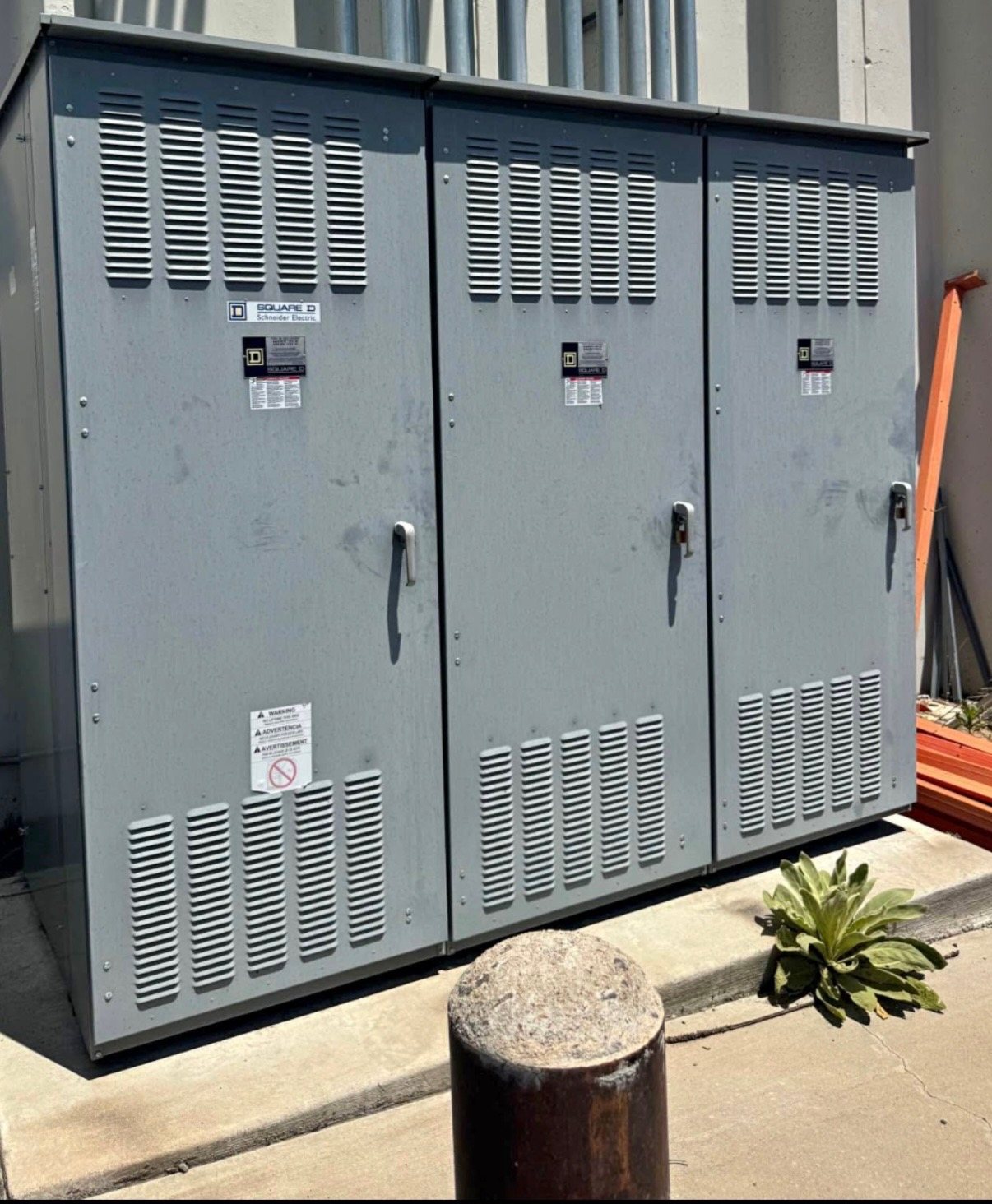
A motor control center can comprise several vertical sections and removable units serving different loads. If your records or safe exterior views show the section count, manufacturer, model, voltage or current markings, include those details. Note any separately stored units and whether they form part of the proposed sale. A list that connects a photograph to each cabinet helps prevent similar-looking sections from being confused. There is no need to remove a unit, open a door or operate a control to make an inquiry; we can begin with the information already at hand.
A nameplate can contain several electrical figures with different meanings. For example, a current marking, a voltage marking and a short-circuit marking should not be treated as interchangeable facts. Share the wording or a safely obtained exterior image rather than interpreting a number that is unclear. If a drawing and a nameplate differ, note the discrepancy. Our review considers the information available for the actual equipment, and a photograph alone cannot establish its electrical performance or suitability for another installation.
Records, condition and the scope of the sale
If the equipment has been stored for a long time, the details may be scattered across inventory records, packing lists and photographs taken on different dates. Sharing those existing materials together can give us a clearer picture than a single asset number. Explain which pictures show the current equipment and which are historical references, and note whether any accessories are held separately. We can discuss questions about completeness during the review. You do not need to unpack, move or energize stored equipment for the purpose of the initial inquiry.
For a mixed lot, quantities and boundaries help avoid misunderstandings. Explain whether you are offering every item shown in a photograph or only specific cabinets or devices, and identify anything the site intends to retain. If an accessory's relationship to the main assembly is uncertain, say so. Share a list based on existing records rather than rearranging or handling the gear. We review the stated scope and can discuss the commercial and logistical details before a sale is agreed.
Buyer-handled rigging and logistics
If more than one organization is involved at the property, tell us who can discuss the offered equipment and who controls access to the site. An owner, contractor and facility manager may have different responsibilities, and the sale should cover only assets the seller is authorized to offer. Gate rules, access hours and an existing equipment inventory can be useful for planning. We handle the physical work and logistics, including qualified disconnects and paid freight, rather than asking the seller to move or load an assembly.
Pickup planning starts with the site's practical constraints. Tell us where the equipment is located, whether there is a loading area, and whether gates, vehicle access, security procedures or available working hours affect the site. An approximate dimension or weight from an existing record can help if you have it; clearly mark an estimate as an estimate. You do not have to measure, lift or move equipment. We use the information to discuss the appropriate logistics after the equipment and sale terms have been reviewed.
Cash offer and upfront payment
You can contact us with one item or a larger group of surplus assets. Send a list and safely available external nameplate photos if you have them, and let us know about the location and any known site access constraints. We consider all voltage classes, and an offer depends on review rather than a presumed value. If a cash offer is made and accepted, we pay upfront. We arrange qualified disconnects and handle the necessary crane, rigging, loading, hauling and freight. Sellers do not perform testing or removal work.
If you have a drawing or equipment schedule, it can be useful context, but be clear about its date and whether it reflects the present configuration. A drawing may cover assets that are not part of the sale, and a later modification may not appear on an older plan. Never disclose sensitive site material publicly merely to prepare an inquiry. Tell us what records exist and share only material you are authorized to provide. Our discussion can begin even if the only information available is a basic description and the equipment location.