
Selling switchgear: what to share
If your business owns switchgear in Baltimore County that is no longer needed, you can contact us about selling it. We are an equipment buyer: we review used and surplus assets and may make a cash offer. The scope can range from a single item to a larger group, depending on what you are authorized to sell. The offer depends on the information and equipment involved, not an assumed value for every unit. We consider all voltage classes and do not require seller testing.
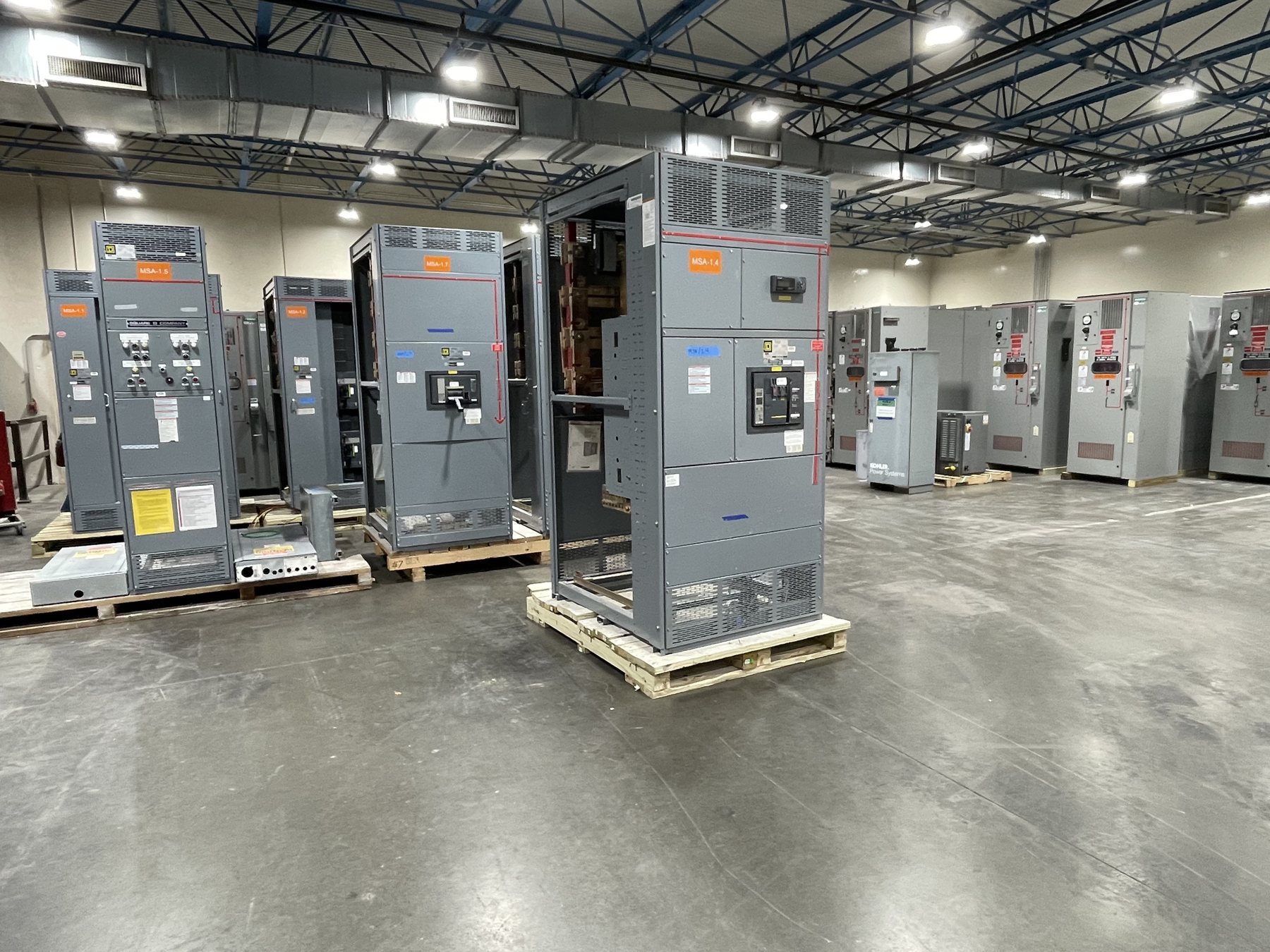
A switchgear lineup may have more than one section, and the name on the outside of the assembly may not tell the whole story about the devices installed in it. If safely visible or already in your records, tell us the manufacturer, model, voltage and continuous-current markings, the number of sections, and whether associated breakers are included. A photograph of the complete exterior helps relate those details to the actual assembly. If a marking is missing, obscured or inconsistent with an old document, say so rather than guessing. Those observations help identify the asset; they do not establish its condition, operating history or compatibility.
If the equipment has been stored for a long time, the details may be scattered across inventory records, packing lists and photographs taken on different dates. Sharing those existing materials together can give us a clearer picture than a single asset number. Explain which pictures show the current equipment and which are historical references, and note whether any accessories are held separately. We can discuss questions about completeness during the review. You do not need to unpack, move or energize stored equipment for the purpose of the initial inquiry.
Records, condition and the scope of the sale
Photographs work best when they are tied to the seller's description. A safely available wide exterior view can show the number and arrangement of sections, while a readable external nameplate can provide the manufacturer's identification and ratings. If a label is inaccessible or unreadable, tell us what is available instead. Do not enter a hazardous area, open doors or covers, operate equipment, or approach guarded interiors to get a picture. There is no seller testing requirement; we can begin with whatever information can be provided safely.
When a nameplate cannot be read safely, a seller can still describe the equipment type, quantity, manufacturer if known, and the general project context. State plainly that the rating or model has not been confirmed. If an old photograph or inventory record is available, distinguish it from a current observation. Do not open a door or cover to get a better view and do not operate the equipment. We can discuss the available information without requiring a seller to test or handle an electrical asset.
Buyer-handled rigging and logistics
For heavy or multi-section assemblies, a building's route and access requirements can matter as much as the equipment list. Share any existing information about stairs, doors, loading docks, site gates or restricted areas, but do not put yourself at risk trying to investigate them. Let us know if there are visitor requirements or a site contact who can discuss access. Our team arranges the necessary disconnects, rigging and removal, including any crane work, loading, hauling and paid freight. No seller testing or physical work is required.
If more than one organization is involved at the property, tell us who can discuss the offered equipment and who controls access to the site. An owner, contractor and facility manager may have different responsibilities, and the sale should cover only assets the seller is authorized to offer. Gate rules, access hours and an existing equipment inventory can be useful for planning. We handle the physical work and logistics, including qualified disconnects and paid freight, rather than asking the seller to move or load an assembly.
Cash offer and upfront payment
The first step is to share what you know about the equipment and where it is located. Manufacturer information, ratings, quantities, condition and safely available exterior photos can make a review more productive, but do not guess at missing details. We consider equipment across all voltage classes and review each request individually. If an offer is made and accepted, the seller receives payment upfront. We handle the qualified disconnects, crane and rigging work as needed, loading, hauling and all freight; the seller performs no testing or physical work.
If pictures are subject to security or privacy rules, let us know at the start. A site contact can explain which exterior views or existing records may be shared, and a written description can still begin the discussion. Avoid showing confidential information that is not needed for the inquiry. Do not enter restricted spaces, open equipment or bypass site procedures for a photograph. Our team can coordinate access and the required qualified work as part of the removal plan rather than asking the seller to do it.