
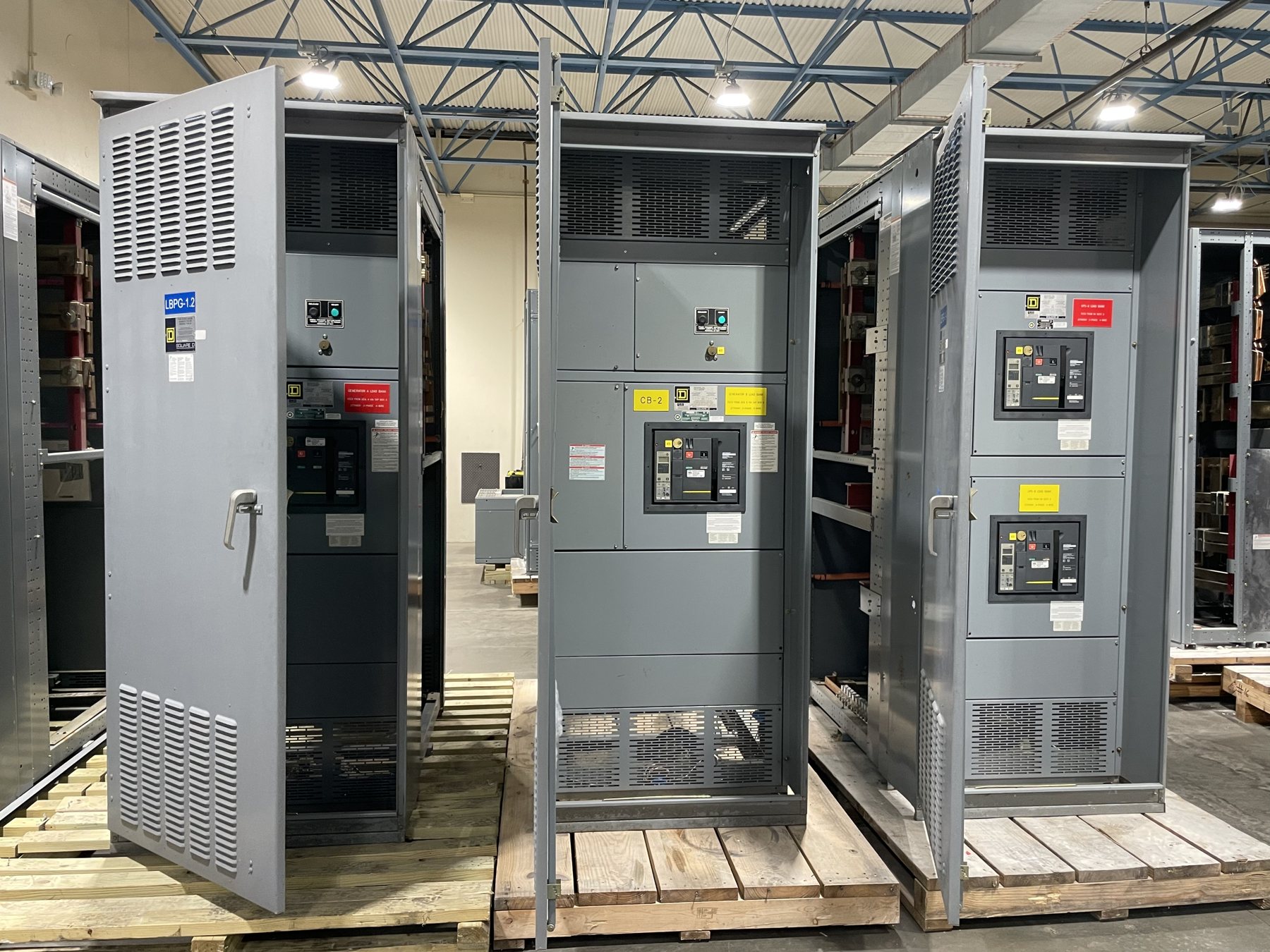
Selling busway: what to share
If your business owns busway in Maryland that is no longer needed, you can contact us about selling it. We are an equipment buyer: we review used and surplus assets and may make a cash offer. The scope can range from a single item to a larger group, depending on what you are authorized to sell. The offer depends on the information and equipment involved, not an assumed value for every unit. We consider all voltage classes and do not require seller testing. If the label or an existing record indicates 240 V, share the marking as written and note which item it describes. A voltage designation alone does not establish condition, compatibility or value.
Busway is often a collection of sections and associated parts rather than one easily described cabinet. If known, note the manufacturer, marked current and voltage, approximate number or length of sections, and whether fittings or tap-off units are part of the offer. Tell us whether the material is still installed or already stored, without attempting to separate or handle it. Existing photos or records can help us understand what is present, while gaps in those records should simply be identified as unknown. Actual removal and logistics are handled by our team.
An assembly may have been modified or expanded during its service life. If a readily available document records a replacement component or an added section, mention it alongside the visible manufacturer and model information. Keep the original assembly rating distinct from markings on a particular device, and do not assume that two pieces with similar appearances are interchangeable. Where the available paperwork cannot establish a detail, describe the gap instead of trying to resolve it through physical inspection. The goal is an accurate description of what is being offered, not a technical certification.
Records, condition and the scope of the sale
Visible condition and operating condition are not the same thing. An exterior picture may reveal damaged paint, a bent door or a missing label, but it cannot establish what is happening behind a closed enclosure. Describe known storage conditions, prior exposure or apparent damage honestly, and mark unknowns as unknown. If a component was stored separately or a record refers to an earlier configuration, include that context. We do not require you to test equipment or make a performance claim simply to receive a review.
If you have a drawing or equipment schedule, it can be useful context, but be clear about its date and whether it reflects the present configuration. A drawing may cover assets that are not part of the sale, and a later modification may not appear on an older plan. Never disclose sensitive site material publicly merely to prepare an inquiry. Tell us what records exist and share only material you are authorized to provide. Our discussion can begin even if the only information available is a basic description and the equipment location.
Buyer-handled rigging and logistics
For heavy or multi-section assemblies, a building's route and access requirements can matter as much as the equipment list. Share any existing information about stairs, doors, loading docks, site gates or restricted areas, but do not put yourself at risk trying to investigate them. Let us know if there are visitor requirements or a site contact who can discuss access. Our team arranges the necessary disconnects, rigging and removal, including any crane work, loading, hauling and paid freight. No seller testing or physical work is required.
If more than one organization is involved at the property, tell us who can discuss the offered equipment and who controls access to the site. An owner, contractor and facility manager may have different responsibilities, and the sale should cover only assets the seller is authorized to offer. Gate rules, access hours and an existing equipment inventory can be useful for planning. We handle the physical work and logistics, including qualified disconnects and paid freight, rather than asking the seller to move or load an assembly.
Cash offer and upfront payment
A useful inquiry can begin with a short description and whatever records or photos already exist. Explain the equipment type, quantity, location and known condition, and identify anything you are not sure about. We review the submission and may make a cash offer; the details of the actual equipment matter, so a price cannot be determined from a page title. After an agreed sale, payment is upfront. Our team handles all necessary disconnects through qualified personnel, rigging, loading, hauling and freight, with all freight paid by us.
Owners sometimes know the history of an asset in broad terms but lack records of every service or modification. That is useful context when described accurately: distinguish a known storage period, for example, from a guess about whether the equipment would operate. Mention external damage, missing labels or separately stored parts if they are known. We do not ask the seller to prove functionality with a test. A straightforward account of condition and uncertainty is more helpful than an unsupported assurance.