
Selling used and surplus electrical equipment: what to share
If your business owns used and surplus electrical equipment in Maryland that is no longer needed, you can contact us about selling it. We are an equipment buyer: we review used and surplus assets and may make a cash offer. The scope can range from a single item to a larger group, depending on what you are authorized to sell. The offer depends on the information and equipment involved, not an assumed value for every unit. We consider all voltage classes and do not require seller testing.
Mixed electrical equipment is easier to review when each item or group is described separately. Your list might include switchgear, circuit breakers, switchboards, motor control centers, panelboards, automatic transfer switches, busway or unit substations. For each, share the type, quantity, manufacturer and ratings if those details are already known or safely visible. Identify what belongs to the same assembly and what is not part of the proposed sale. A mixed list need not be perfect to start a conversation: an uncertain model or missing record can be identified as unknown.
At an industrial plant, equipment inventories may span production areas, utility spaces and storage locations. Explain which assets are surplus, whether they are grouped together, and what access or operating restrictions apply. Existing records can help identify equipment without interrupting operations. We handle the physical work and logistics, arranging qualified personnel for disconnects; sellers do not need to test, move or load the equipment. The offer and removal plan depend on the specific equipment and agreed project scope rather than a presumed plant configuration.
Records, condition and the scope of the sale
For a group of similar-looking items, a simple item list can prevent confusion during review. Give each cabinet or device an easy reference, record its quantity, and connect any available photo to the corresponding entry. If several units share a manufacturer but have different models or ratings, keep those differences visible in the list. Include any obvious exterior damage and flag missing identification. This approach is useful even when the history of the equipment is incomplete, because it separates what is actually known from assumptions about operation or condition.
If you have a drawing or equipment schedule, it can be useful context, but be clear about its date and whether it reflects the present configuration. A drawing may cover assets that are not part of the sale, and a later modification may not appear on an older plan. Never disclose sensitive site material publicly merely to prepare an inquiry. Tell us what records exist and share only material you are authorized to provide. Our discussion can begin even if the only information available is a basic description and the equipment location.
Buyer-handled rigging and logistics
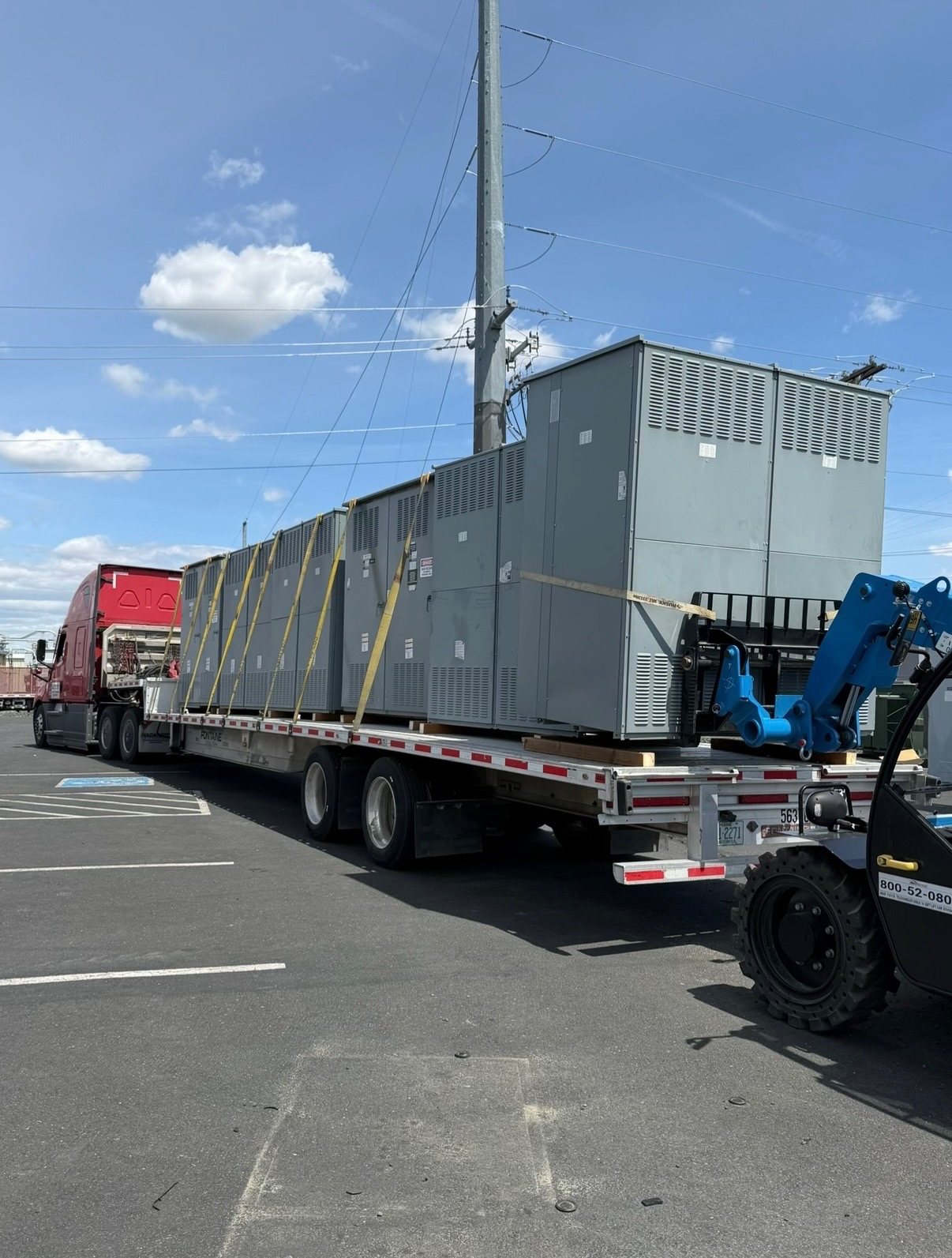
If the equipment is already in storage, explain whether it is in one place or divided among several areas, and whether it is a complete lineup or separate pieces. An existing packing list or safely available photo can be helpful; you do not need to uncrate or rearrange anything to create a request. Mention any gate hours or access rules that might affect the pickup discussion. We handle the logistics and freight, with the actual plan coordinated around the details of the equipment and the site.
For a phased project, identify the items available now and those whose release is still uncertain. If there are multiple buildings or anticipated phases, a short list of locations and equipment counts helps us understand the scope without assuming that every item will be available at the same time. The schedule and final logistics are coordinated around the actual project. Our team handles crane work when needed, rigging, qualified disconnects, loading, freight and hauling; the seller does not have to perform that work.
Cash offer and upfront payment
Start with the equipment description and any safely available exterior photographs, along with your contact and location details. We review the information and can make a cash offer based on the actual equipment and circumstances; not every inquiry results in an offer. If the parties agree to a sale, payment is made upfront. Our team then coordinates the necessary disconnects and physical logistics, including rigging, loading, hauling and freight. All freight is paid by us. You do not need to test the equipment, operate it, or take on the removal work.
Owners sometimes know the history of an asset in broad terms but lack records of every service or modification. That is useful context when described accurately: distinguish a known storage period, for example, from a guess about whether the equipment would operate. Mention external damage, missing labels or separately stored parts if they are known. We do not ask the seller to prove functionality with a test. A straightforward account of condition and uncertainty is more helpful than an unsupported assurance.