
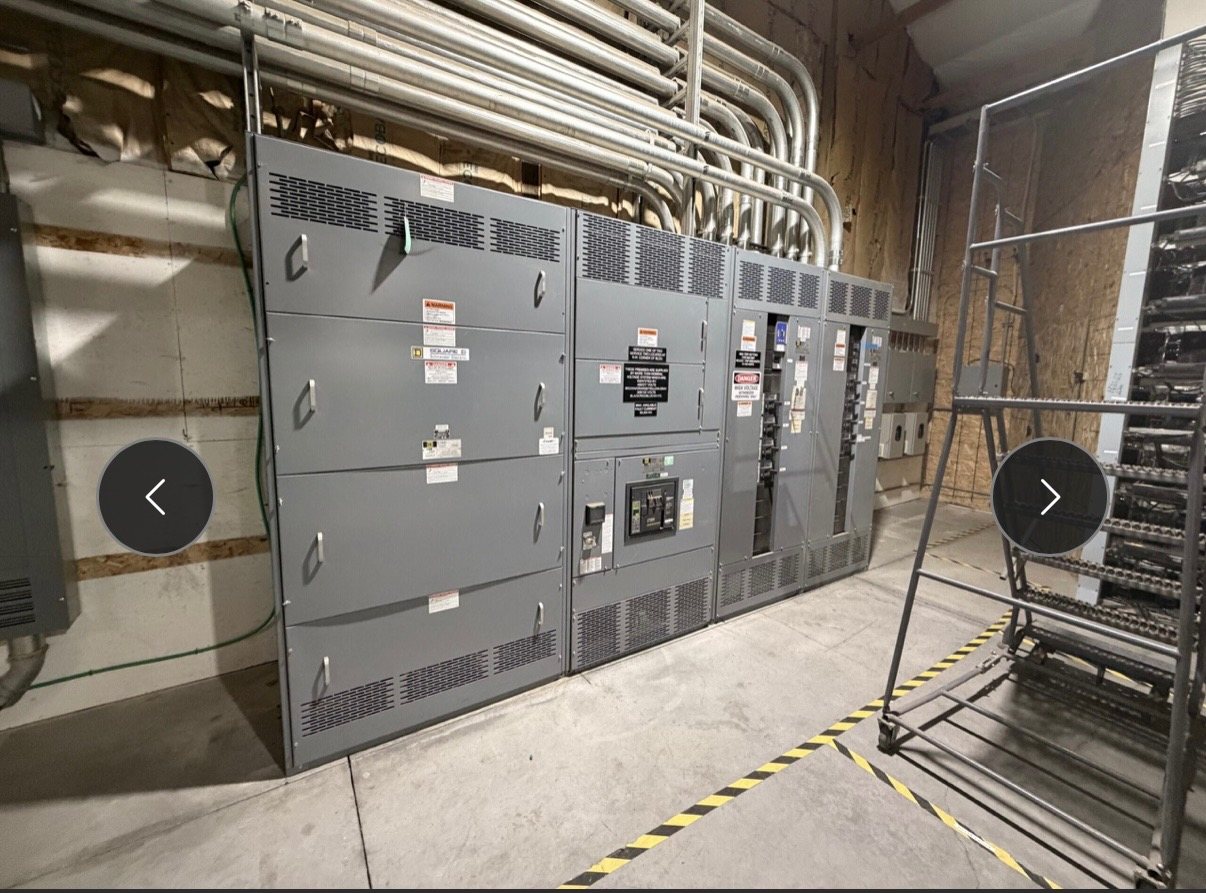
Selling circuit breakers: what to share
If your business owns circuit breakers in Maryland that is no longer needed, you can contact us about selling it. We are an equipment buyer: we review used and surplus assets and may make a cash offer. The scope can range from a single item to a larger group, depending on what you are authorized to sell. The offer depends on the information and equipment involved, not an assumed value for every unit. We consider all voltage classes and do not require seller testing.
A circuit-breaker inquiry is more useful when the breaker itself is distinguished from the larger assembly it may have served. Share the manufacturer, model or catalog number, voltage and current markings, quantity and any accessories that are included, but only where the information is safely available. A frame marking, trip setting and interrupting rating can describe different things; do not assume that one number answers every question. Identify whether the items are loose or associated with a lineup. We can discuss an incomplete inventory without asking you to operate or test a breaker.
For a shut-down power plant, distinguish the equipment included in the sale from assets that remain under the owner's control or are subject to project restrictions. Existing inventories, safe exterior photos and authorized site contacts can help define the scope. We buy switchgear from shut-down power plants and decommissioned data centers, and we handle the necessary crane, rigging, qualified disconnects, loading, hauling and freight. Do not attempt electrical work or testing to prepare an inquiry; site access and project-specific restrictions are coordinated with our team.
Records, condition and the scope of the sale
A nameplate can contain several electrical figures with different meanings. For example, a current marking, a voltage marking and a short-circuit marking should not be treated as interchangeable facts. Share the wording or a safely obtained exterior image rather than interpreting a number that is unclear. If a drawing and a nameplate differ, note the discrepancy. Our review considers the information available for the actual equipment, and a photograph alone cannot establish its electrical performance or suitability for another installation.
If you have a drawing or equipment schedule, it can be useful context, but be clear about its date and whether it reflects the present configuration. A drawing may cover assets that are not part of the sale, and a later modification may not appear on an older plan. Never disclose sensitive site material publicly merely to prepare an inquiry. Tell us what records exist and share only material you are authorized to provide. Our discussion can begin even if the only information available is a basic description and the equipment location.
Buyer-handled rigging and logistics
Before a collection plan is finalized, existing information about dimensions, weight, the path from the equipment and site access can help our team assess the logistics. If no reliable measurements exist, simply say they are unknown; an unsafe measurement is not necessary. Let us know about restricted hours, security clearance requirements and a person who can discuss the site. We handle the crane, rigging, qualified disconnects, loading and hauling as needed, and we pay all freight. Specific arrangements depend on the equipment and project.
For heavy or multi-section assemblies, a building's route and access requirements can matter as much as the equipment list. Share any existing information about stairs, doors, loading docks, site gates or restricted areas, but do not put yourself at risk trying to investigate them. Let us know if there are visitor requirements or a site contact who can discuss access. Our team arranges the necessary disconnects, rigging and removal, including any crane work, loading, hauling and paid freight. No seller testing or physical work is required.
Cash offer and upfront payment
A useful inquiry can begin with a short description and whatever records or photos already exist. Explain the equipment type, quantity, location and known condition, and identify anything you are not sure about. We review the submission and may make a cash offer; the details of the actual equipment matter, so a price cannot be determined from a page title. After an agreed sale, payment is upfront. Our team handles all necessary disconnects through qualified personnel, rigging, loading, hauling and freight, with all freight paid by us.
Owners sometimes know the history of an asset in broad terms but lack records of every service or modification. That is useful context when described accurately: distinguish a known storage period, for example, from a guess about whether the equipment would operate. Mention external damage, missing labels or separately stored parts if they are known. We do not ask the seller to prove functionality with a test. A straightforward account of condition and uncertainty is more helpful than an unsupported assurance.