
Selling switchgear: what to share
If your business owns switchgear in Crofton, Anne Arundel County that is no longer needed, you can contact us about selling it. We are an equipment buyer: we review used and surplus assets and may make a cash offer. The scope can range from a single item to a larger group, depending on what you are authorized to sell. The offer depends on the information and equipment involved, not an assumed value for every unit. We consider all voltage classes and do not require seller testing.
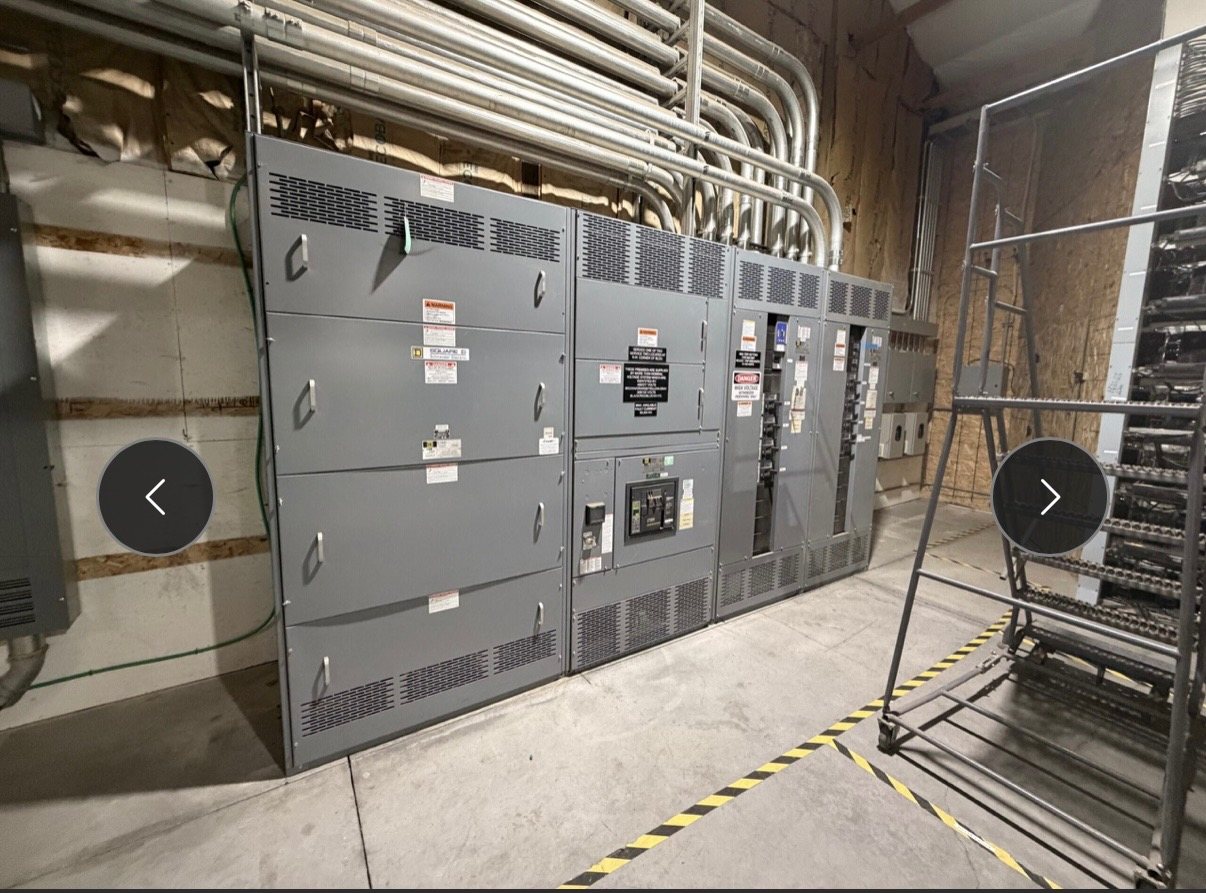
A switchgear lineup may have more than one section, and the name on the outside of the assembly may not tell the whole story about the devices installed in it. If safely visible or already in your records, tell us the manufacturer, model, voltage and continuous-current markings, the number of sections, and whether associated breakers are included. A photograph of the complete exterior helps relate those details to the actual assembly. If a marking is missing, obscured or inconsistent with an old document, say so rather than guessing. Those observations help identify the asset; they do not establish its condition, operating history or compatibility.
A sale may include a complete assembly, separate sections, loose devices, or some combination of those items. State what is included and mention anything you intend to keep, particularly accessories or components stored away from the main equipment. Do not assume that an accessory belongs to a particular cabinet just because it was found nearby; an existing label or record may clarify the connection. If you are uncertain, describe the uncertainty. Separating the scope of the offer from assumptions about the equipment helps us review the actual lot.
Records, condition and the scope of the sale
A project's boundaries can change over time. Before requesting an offer, it is useful to identify which equipment is genuinely available and who has authority to approve the sale. An asset may belong to a property owner, a tenant, a contractor or another party; the correct answer depends on the specific project. Tell us if a decision is still pending or if part of an assembly must remain on site. An inquiry can begin with incomplete information, but a clear description of the proposed sale helps avoid mixing retained assets with surplus assets.
If pictures are subject to security or privacy rules, let us know at the start. A site contact can explain which exterior views or existing records may be shared, and a written description can still begin the discussion. Avoid showing confidential information that is not needed for the inquiry. Do not enter restricted spaces, open equipment or bypass site procedures for a photograph. Our team can coordinate access and the required qualified work as part of the removal plan rather than asking the seller to do it.
Buyer-handled rigging and logistics
If more than one organization is involved at the property, tell us who can discuss the offered equipment and who controls access to the site. An owner, contractor and facility manager may have different responsibilities, and the sale should cover only assets the seller is authorized to offer. Gate rules, access hours and an existing equipment inventory can be useful for planning. We handle the physical work and logistics, including qualified disconnects and paid freight, rather than asking the seller to move or load an assembly.
Pickup planning starts with the site's practical constraints. Tell us where the equipment is located, whether there is a loading area, and whether gates, vehicle access, security procedures or available working hours affect the site. An approximate dimension or weight from an existing record can help if you have it; clearly mark an estimate as an estimate. You do not have to measure, lift or move equipment. We use the information to discuss the appropriate logistics after the equipment and sale terms have been reviewed.
Cash offer and upfront payment
Start with the equipment description and any safely available exterior photographs, along with your contact and location details. We review the information and can make a cash offer based on the actual equipment and circumstances; not every inquiry results in an offer. If the parties agree to a sale, payment is made upfront. Our team then coordinates the necessary disconnects and physical logistics, including rigging, loading, hauling and freight. All freight is paid by us. You do not need to test the equipment, operate it, or take on the removal work.
Freight and physical removal are different from the seller's responsibility to describe what is being offered. You can provide existing information about location and access without arranging labor, selecting a crane or preparing the equipment for loading. Our team handles the necessary rigging and logistics, and qualified personnel handle disconnects. All freight is paid by us. Tell us about relevant site rules or uncertainties so the work can be coordinated appropriately; do not expose yourself to electrical hazards to gather additional details.