
Selling switchgear: what to share
If your business owns switchgear in Glen Burnie, Anne Arundel County that is no longer needed, you can contact us about selling it. We are an equipment buyer: we review used and surplus assets and may make a cash offer. The scope can range from a single item to a larger group, depending on what you are authorized to sell. The offer depends on the information and equipment involved, not an assumed value for every unit. We consider all voltage classes and do not require seller testing.
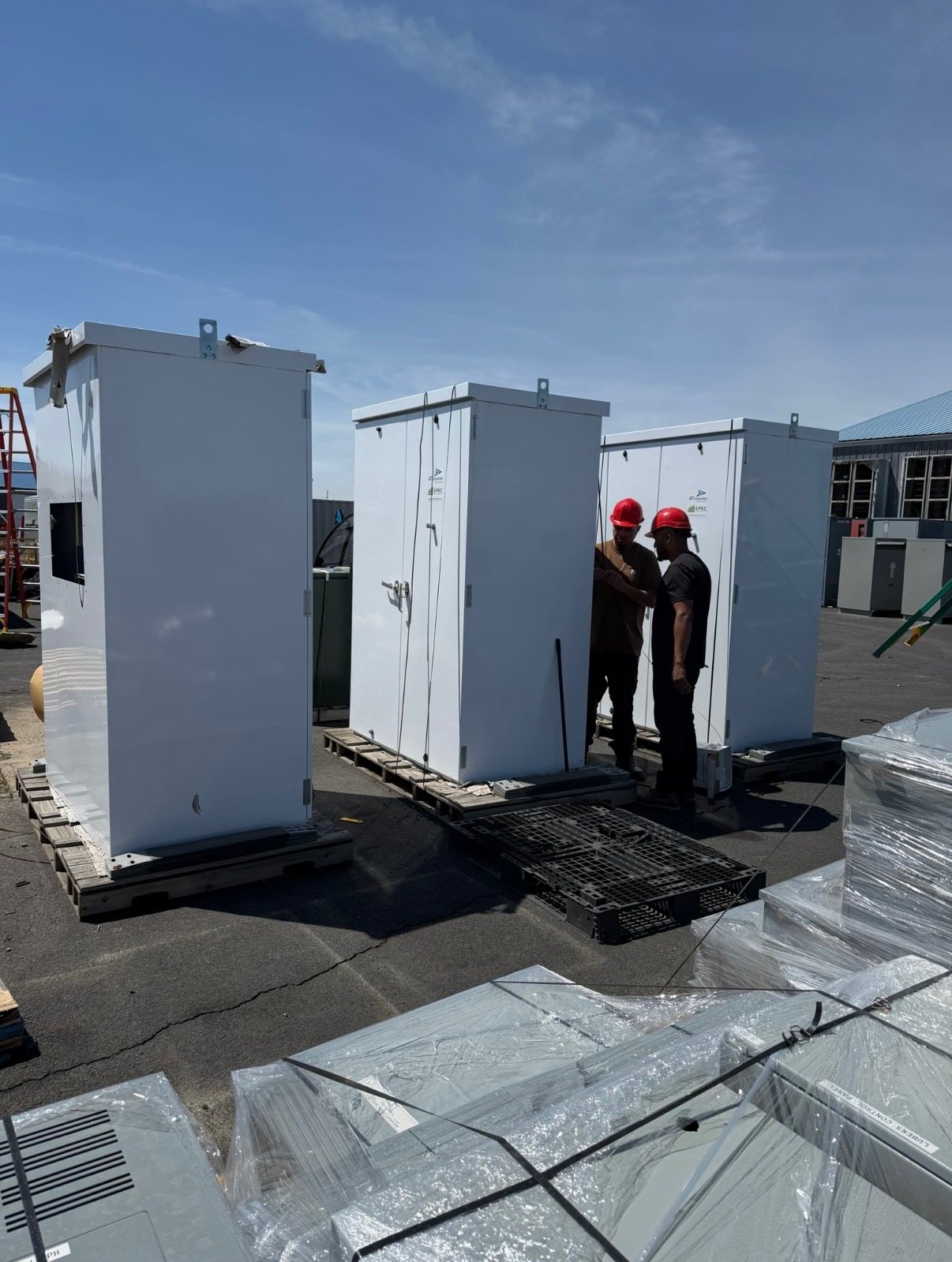
A switchgear lineup may have more than one section, and the name on the outside of the assembly may not tell the whole story about the devices installed in it. If safely visible or already in your records, tell us the manufacturer, model, voltage and continuous-current markings, the number of sections, and whether associated breakers are included. A photograph of the complete exterior helps relate those details to the actual assembly. If a marking is missing, obscured or inconsistent with an old document, say so rather than guessing. Those observations help identify the asset; they do not establish its condition, operating history or compatibility.
Some facilities have more than one equipment room or storage location. Describe where each offered item is located in general terms and identify which items belong together. A simple reference such as a building name or room identifier can help the right people discuss access without publishing sensitive facility details. If pictures or documents are restricted, let us know what the site's rules permit. Our review does not require you to bypass those rules, expose internal equipment or carry out an electrical inspection.
Records, condition and the scope of the sale
Visible condition and operating condition are not the same thing. An exterior picture may reveal damaged paint, a bent door or a missing label, but it cannot establish what is happening behind a closed enclosure. Describe known storage conditions, prior exposure or apparent damage honestly, and mark unknowns as unknown. If a component was stored separately or a record refers to an earlier configuration, include that context. We do not require you to test equipment or make a performance claim simply to receive a review.
Owners sometimes know the history of an asset in broad terms but lack records of every service or modification. That is useful context when described accurately: distinguish a known storage period, for example, from a guess about whether the equipment would operate. Mention external damage, missing labels or separately stored parts if they are known. We do not ask the seller to prove functionality with a test. A straightforward account of condition and uncertainty is more helpful than an unsupported assurance.
Buyer-handled rigging and logistics
A seller may have a preferred project sequence without knowing the details of a future lift or vehicle. Describe any relevant access restrictions, other work taking place nearby and any approval steps that could affect scheduling. If the equipment spans more than one room, identify the locations and the quantities involved. Our team handles the rigging and logistics, so the seller is not expected to arrange a crane, load the material or perform a disconnect. Actual timing and the collection plan are coordinated for the specific project.
A facility may be operating normally even when some equipment is surplus. Tell us about access procedures, designated contacts and any restrictions on photography or visitor entry. Do not change operating conditions or work on an electrical system to prepare the sale. Our team arranges qualified personnel for the necessary disconnects and handles the rest of the rigging and logistics. The site's rules and the project's actual scope guide coordination; a seller does not need to provide labor, arrange hauling or pay the freight.
Cash offer and upfront payment
Our role is to buy surplus equipment, not to sell equipment to the person making the inquiry. Share a description of the items you own or are authorized to sell, their general location and any relevant documentation. We review the information and may make a cash offer. If an offer is accepted, payment is upfront and we handle the physical side of the transaction: qualified disconnects, necessary crane and rigging work, loading, hauling and all freight. No seller testing, electrical work or physical handling is required.
A record of the transaction can be useful when a company is updating its asset register or closing out a project. Identify the person authorized to discuss the sale and provide a reliable contact for commercial questions. If the equipment is listed under multiple internal references, explain how the references relate to the physical items. The important point is to avoid transferring an asset that was not intended to be included. Our cash offer, upfront payment and buyer-handled logistics can then be discussed against a defined scope.